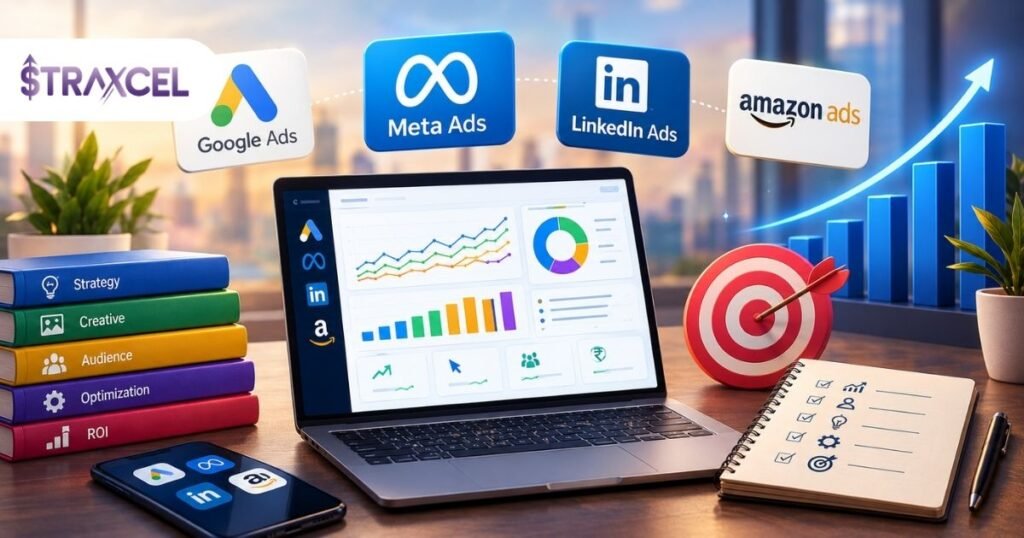
Almost every founder I work with asks me some version of the same question in our first call – “Google or Meta, where should I put my first rupee?”
It’s a fair question, and it’s also the wrong one to lead with, because the honest answer is neither platform is universally better. They work on completely different logic, and picking the right one first depends entirely on what you’re selling and how people actually go about buying it.
Let me walk you through how I actually think about this decision, because once you understand the difference in how these two platforms work, the choice usually becomes obvious.
Two Completely Different Kinds of Attention
The easiest way to understand this is to think about what someone is doing on each platform in the moment your ad reaches them.
On Google, someone is actively searching. They’ve typed “emergency plumber near me” or “best CRM software for small business” because they already have a problem and they’re looking for a solution right now.
Their wallet is basically already out. Google Ads doesn’t create that desire, it just puts you in front of it at the exact right second. That’s why this is called capturing demand.
On Meta, nobody opened Instagram thinking “I really need to buy new software today.” They’re there to see friends, watch reels, and pass time.
Your ad has to interrupt that scroll, catch attention in under three seconds, and convince someone of a need they may not have even known they had. Meta doesn’t capture existing demand, it creates new demand.
That distinction changes everything about how you should use each platform.
When Google Ads Should Get Your Budget First
I usually tell clients to lead with a Google ads agency approach first if their business fits a few clear patterns.
If you offer something urgent or highly specific – a repair service, a medical clinic, specialised B2B software – people don’t discover that kind of thing scrolling Instagram.
They search for it the moment they need it, out of necessity. The same goes for competitive, well-known product categories where buyers actively compare prices, like electronics or office furniture.
Google Shopping puts you right next to your competitors at the exact moment someone’s deciding who to buy from.
And if a quick check of Google Keyword Planner shows thousands of people already searching for your exact product or service every month in India, that’s demand sitting there waiting to be captured.
It makes sense to go after that low-hanging fruit before spending money trying to build brand awareness from scratch on social media.
When Meta Ads Should Get Your Budget First
On the flip side, I push clients toward Meta first when the business leans on a different set of characteristics.
If you’ve built something genuinely new that people don’t already know they need, nobody is searching for it on Google yet. You have to show them how it works and why it matters, and video is far better at that than a search result ever could be.
This is exactly why visually driven categories – fashion, beauty, lifestyle products – tend to do so well through a Meta or Facebook ads agency approach, because the format lets you tell an emotional story in seconds.
The same logic applies to products with broad appeal rather than a narrow, specific need – fitness gear, home organisation products, gifting items.
Meta’s targeting is genuinely strong at finding people based on long-term interests and behaviour, not just a search term they typed once.
And lower-priced products that people buy on impulse tend to convert well here too, because a scroll-stopping video ad can trigger a purchase decision in the moment, without the buyer needing to actively search for anything first.
The Trap Hiding Inside Each Platform
Both platforms have a failure mode I see founders fall into constantly, and it’s worth knowing before you commit budget to either.
On Google, the risk is cost. Because search traffic has such high intent, competitive keywords get genuinely expensive.
In categories like legal services, insurance, or enterprise software, a single click can cost several hundred rupees. If your landing page isn’t built to actually convert that visitor once they land, you can burn through your entire monthly budget in days without generating a single real lead.
On Meta, the risk is creative fatigue. A strong video ad might perform brilliantly for two or three weeks, and then your audience simply gets tired of seeing it. Once that happens, performance drops and your cost per lead climbs, sometimes fast.
Winning on Meta over time requires a steady pipeline of new hooks, new visuals, and new angles, not one great ad running on repeat for months.
How These Two Actually Work Together
Here’s what most articles on this topic skip entirely – you shouldn’t be picking one platform forever. You’re picking where to start, and the smartest brands eventually run both, working together.
The sequence I generally recommend to growing businesses looks like this.
Start with Google Search and brand protection campaigns first, so that when someone hears about you or searches your exact business name, you’re the one showing up at the top, not a competitor.
Once that foundation is secure, bring in Meta to build broader awareness, tell your brand’s story properly, and pull in fresh traffic from people who’ve never encountered you before.
Then connect the two – when someone clicks your Meta ad but doesn’t buy right away, retarget them with a Google search ad or a short video the next time they’re actively looking, so you’re catching that same person from two different directions.
Making the Actual Decision
Stop trying to figure this out from generic comparisons online. Look at your actual product, how your customers genuinely shop for it, and what your margins can realistically support.
If people are already searching for what you sell, start with Google Ads to capture that demand and get cash flow moving quickly. If your product needs a visual story to build interest from nothing, put your first budget into Meta instead.
Once that first channel is working and stable, bring the other one in, and you’ve got a connected system doing far more than either platform could do alone.