A founder I worked with last year had already hired two in-house marketers before he ever called us.
Six months in, he was paying two salaries, still handling PPC himself on weekends, and his content calendar was three weeks behind.
He wasn’t a bad hirer. He’d just made the decision too early, before his business actually needed what an internal team is built to provide.
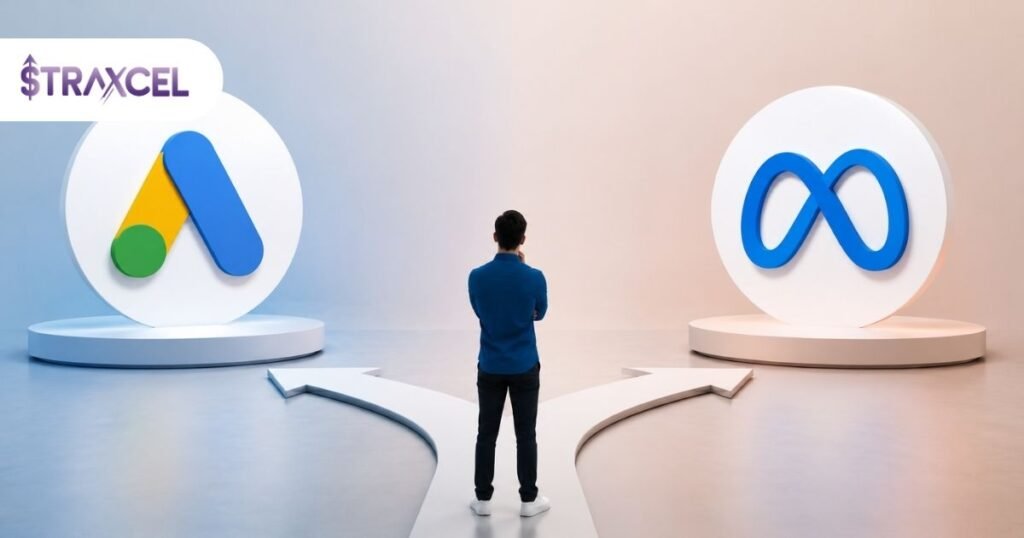
This is one of the most common crossroads I see growing brands hit, and most founders treat it as a simple either-or choice. It rarely is.
Let me walk you through how I actually think about this decision, because the right answer depends far more on your stage of growth than most people realise.
The Real Cost Difference Nobody Explains Clearly
The most obvious difference between the two models is how your money actually gets spent, and it’s bigger than most founders expect.
Building an in-house team means fixed costs that don’t move, no matter how your revenue does that month.
A performance marketer in India typically costs somewhere in the range of ₹6 to ₹12 lakhs a year depending on experience.
An SEO or content specialist sits in a similar range. A designer or video editor adds another chunk. Add software subscriptions, recruitment costs, and basic overhead, and a modest three-person internal marketing setup can easily cost ₹25 to ₹40 lakhs a year, before a single rupee goes toward actual ad spend. And if revenue dips that quarter, those salaries don’t dip with it.
A digital marketing agency works on a completely different cost structure.
You pay a monthly retainer that’s typically a fraction of what a full internal department costs, and that retainer buys you access to a whole team – strategists, media buyers, designers, data specialists – without carrying any of them as a fixed liability on your books.
One Generalist vs. an Entire Team of Specialists
Marketing today isn’t one skill. It’s data tracking, video production, copywriting, platform-specific ad buying, and technical SEO, all running at once. That’s a lot to expect from one or two people.
When a growing business hires its first internal marketer, they’re almost always forced to hire a generalist – someone who “knows social media and can also handle a blog.”
That person is rarely deep in any single area, and it’s not their fault. Nobody can be genuinely excellent at six different disciplines simultaneously. Your growth eventually hits a ceiling, not because your marketer isn’t trying, but because they physically can’t stretch that far.
A proper digital marketing agency brings a full team instead of one stretched person. A dedicated media buyer runs your ad spend. A technical SEO specialist audits your website.
A creative director handles your video hooks. They’re all working on your account together, not one person juggling all of it alone.
Where In-House Teams Genuinely Win
Agencies win on cost and breadth of skill, but internal teams have one real advantage – proximity. Someone sitting inside your company every day absorbs your brand, your product, and your customer feedback in a way that’s hard to replicate from outside.
They can walk over to the product team and get an answer in five minutes. They know your customers because they’re talking to your support team over lunch.
An agency, even a great one, is managing other clients alongside yours. They build strong communication systems to stay close to your business, but they’ll never have that same 24/7 immersion an internal employee has by default.
You have to actively feed them context, product updates, and customer insight, rather than assuming they’ll pick it up by osmosis.
The Hybrid Model Most Growing Brands End Up Choosing
You don’t actually have to pick one side completely, and honestly, most businesses that scale well don’t. The model I see working best combines both.
Keep one strong person in-house as your brand quarterback – a marketing lead who deeply understands your product, sits close to daily operations, and acts as the bridge between your business and whoever’s executing outside.
Then bring in a digital marketing agency to handle the heavy execution – paid media, technical SEO, video production, data infrastructure – the parts that genuinely benefit from a full specialist team rather than one generalist trying to cover everything.
This gives you someone who knows your business inside and out, plugged into a team that can actually execute at the level modern marketing requires.
Matching the Model to Where You Actually Are
If you’re an early-stage business still finding product-market fit, building an expensive in-house team before you have that certainty is one of the fastest ways to burn through cash you’ll need later.
Working with an agile agency to build initial traction and acquisition loops usually makes far more sense at this stage, since you’re not locked into fixed salaries while you’re still figuring things out.
If you’re a larger, established brand with constant product launches and a genuinely large operational footprint, an in-house core team starts to earn its place, usually still backed by an agency partner for the specialised, heavy-lifting work that’s hard to build fully in-house.
There’s no universally right answer here. There’s only the right answer for your current stage, your budget, and how much of this work genuinely needs someone sitting inside your walls versus a specialist team executing from outside them.