There’s a moment almost every founder hits, and I’ve watched it play out enough times to recognise it instantly.
You’ve found product-market fit, your first campaigns are profitable, there’s some cash sitting in the bank, and the logic feels obvious – double the budget, double the revenue, scale fast.
I’ve had founders come to me genuinely surprised when that logic didn’t hold.
They took their daily spend from ₹50,000 to ₹2,00,000, expecting revenue to follow proportionally, and instead watched their return on ad spend collapse and their acquisition costs spike, burning through serious money in weeks.
Scaling ad spend isn’t a simple math problem where more input equals more output. It changes the entire system underneath your campaigns.
Before anyone turns that dial up, here’s what I actually walk them through.
The Algorithm Doesn’t Scale the Way You Think It Does
At a modest budget, ad platforms like Meta and Google are working in ideal conditions.
They can afford to be selective, finding the smallest, most obviously interested slice of your audience, the people most likely to buy. That’s why your early campaigns often look deceptively efficient.
The moment you scale your budget, you force the algorithm out of that comfort zone.
To actually spend the extra money, it has to reach further, into broader, less qualified audiences who weren’t part of that original high-intent pool.
Your conversion rate drops. Your acquisition cost climbs. This isn’t a sign something broke, it’s just how auction-based advertising behaves at higher volume.
Before you scale, ask yourself honestly whether your business can absorb a 20 to 30 percent rise in acquisition costs and still stay profitable.
If the answer is no, you’re not ready to increase spend yet, no matter how good last week’s numbers looked.
Figure that stress-test number out before you scale, not after you’ve already spent the money finding out the hard way.
Your Creative Will Burn Out Faster Than You Expect
At a smaller budget, a good video ad can run for months without anyone getting tired of it, simply because your audience is large enough relative to your spend.
Scale the budget, and you burn through that same audience pool much faster. People start seeing your exact ad multiple times a week, and once that happens, click-through rates drop and performance fatigues fast.
Here’s the part founders often miss – scaling your ad spend is really a commitment to scaling your creative production at the same time.
If you don’t have a team, in-house or through an agency, capable of producing a genuine stream of fresh video hooks and format variations every week, your scaled campaign will likely crash within a couple of weeks, not because the strategy was wrong, but because the creative simply ran out of runway.
Your Data Has to Be Solid Before You Spend More on It
If you’re relying purely on basic browser-based tracking to guide decisions at scale, you’re working with incomplete information, and the margin for error gets expensive fast. A data gap that barely matters at a small budget can translate into real money wasted once you’re spending heavily.
Before scaling, I’d want to see server-side tracking in place, a direct connection between your platform and your backend, like Meta’s Conversions API, so the algorithm gets clean conversion data instead of relying on browser signals alone.
I’d also want an independent view of performance, a dashboard that cross-checks what the ad platform claims against what’s actually landing in your bank account, because those two numbers don’t always match.
And ideally, some visibility into how your channels interact, understanding how your Google campaigns are catching traffic that a Meta ad first introduced, rather than treating each platform as if it worked in isolation.
What Happens After the Click Matters More Than the Ad Itself
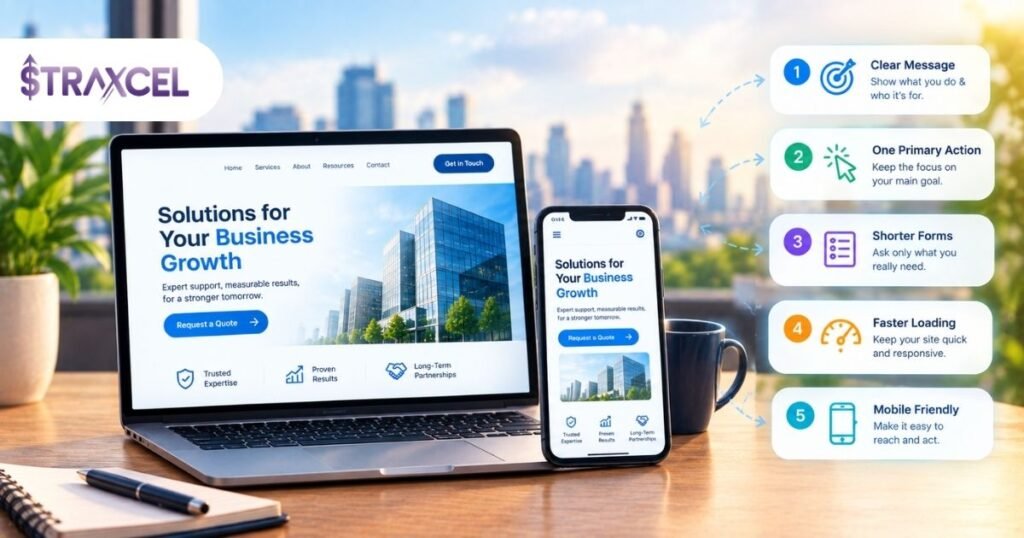
An ad’s only job is to get someone to click. What happens next decides whether that click turns into revenue, and this is where I see founders look in the wrong place when scaling stalls. They keep tweaking the ad account when the actual problem is sitting on their website.
A slow-loading page costs you conversions before someone even sees your offer properly.
A checkout that demands a long form, account creation, or doesn’t support quick UPI payment will lose scaled traffic fast, even if the ad itself was excellent.
For a lot of businesses, shifting part of that funnel toward conversational commerce, letting people complete a purchase through a WhatsApp chat instead of a full website checkout, removes a lot of that friction and holds up much better under higher traffic volume.
Scale With Discipline, Not Excitement
Don’t scale your ad spend just because last week looked good. Scale because your business has genuinely earned the right to, meaning your margins can absorb rising costs, your creative pipeline can keep pace, and your tracking data is something you actually trust.
When you do scale, do it in small steps, something like 15 to 20 percent every few days, giving the algorithm’s learning phase time to stabilise while you watch your actual cash flow, not just the ad platform’s own reported numbers.
Real scale isn’t a single bold decision. It’s a controlled, patient process, and the founders who treat it that way are the ones who end up scaling successfully instead of burning through their reserves finding out the hard way.