Founder Insights

Where I See Digital Marketing Heading Over the Next 5 Years (Straxcel Business Solutions)
Founder Insights

Where I See Digital Marketing Heading Over the Next 5 Years

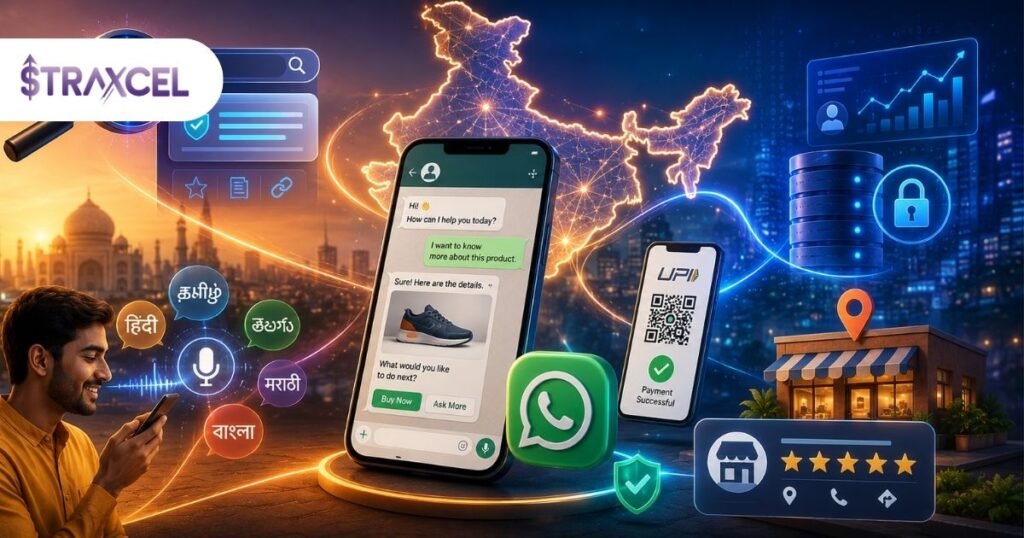
Where I See Digital Marketing Heading Over the Next 5 Years Look back at India’s digital landscape just five years ago, and it already feels like a different country. We went from patchy 4G to genuinely fast 5G. UPI turned into a payment system the rest of the world now studies. And hundreds of millions of new users from Tier-2 and Tier-3 cities came online, not as an afterthought, but as the actual centre of growth. If you think that pace is slowing down, I’d push back on that hard. Working in this market every day, I see the next five years bringing an even bigger shift in how Indian consumers find, evaluate, and buy from brands. Here’s where I genuinely believe things are headed, and what businesses need to start building toward now. 1. Search Stops Being About Links and Starts Being About Answers For years, the entire point of SEO was simple, rank on page one, get the click, send someone to your website. That model is already cracking. With AI now built directly into how people search, through Google’s AI-generated summaries, ChatGPT, and other answer-focused tools, more and more people are getting a complete answer without ever clicking through to a website at all. Over the next five years, I expect traditional SEO to mature fully into what’s increasingly called Generative Engine Optimization, or GEO. The competition won’t just be about keyword density anymore. It’ll be about becoming the source an AI system actually trusts and cites when someone asks a real question. Winning this means building genuine topical authority, publishing real first-party research and detailed case studies, and making sure your brand has authentic, verifiable sentiment across forums and review platforms. If an AI engine can’t confirm your credibility through independent sources across the web, it simply won’t recommend you, no matter how polished your own website looks. 2. Checkout Moves Into the Chat, Permanently India skipped the desktop era almost entirely. Most of our digital population interacts with the internet purely through a phone screen, yet a lot of brands are still funnelling mobile users through slow, multi-step website checkouts built for a different era. I think the standalone checkout page is going to keep losing ground to fully conversational commerce over the next five years. The entire journey, from seeing an ad to getting support after a purchase, increasingly lives inside one chat interface, largely through WhatsApp, backed by AI assistants and UPI payments built directly into the conversation. Someone sees a short video ad, taps to chat, asks a quick question to an AI assistant, picks their option, and pays, all without ever leaving the app. Brands that build around this instead of forcing people back onto a website are going to see meaningfully better conversion rates and lower acquisition costs. 3. The Real Growth Is in Regional Languages, Not English The next wave of India’s digital growth doesn’t come from English-speaking metro users. It comes from the next few hundred million people entering the digital economy from smaller cities and towns, and they’re engaging with their phones very differently, largely through voice, in their own language. Over the next five years, I expect voice searches in Hindi, Tamil, Telugu, Marathi, Bengali, and other regional languages to genuinely outpace text-based English searches in a lot of categories. The mistake I already see brands making is running their English content through basic translation tools and calling it done. That produces stiff, robotic content that misses how people actually speak. The brands that win here are the ones building content around natural, conversational, regional phrasing from the ground up, not translating an English strategy after the fact. 4. Owning Your Own Data Becomes Non-Negotiable With India’s Digital Personal Data Protection Act now fully in force, alongside the broader industry move away from third-party tracking cookies, the era of relying on a basic browser pixel and hoping Meta or Google figures out your ideal customer is over. Businesses still leaning entirely on that approach are already seeing their ad performance quietly erode. I think the next five years turn digital marketing into as much of a data engineering discipline as a creative one. The brands pulling ahead are investing in proper server-side tracking, connecting their CRM data directly to ad platforms through tools like Meta’s Conversions API, and building genuinely useful tools, calculators, quizzes, product recommendation engines, that collect real customer data transparently, in exchange for something useful to the customer. Owning that data pipeline isn’t just about better targeting anymore. It’s what keeps a business compliant while everyone else scrambles to catch up. 5. Local Search Decides Who Actually Gets the Customer As connectivity keeps expanding across smaller cities and towns, “near me” searches keep climbing, and this affects far more businesses than people realise, clinics, retail chains, dealerships, distribution hubs, anyone with a physical footprint. Over the next five years, I expect businesses that ignore their local digital presence to keep losing ground to smaller, more agile competitors who simply got the basics right. Winning this means real investment, not shortcuts, keeping your business name, address, and phone number completely consistent everywhere online, building a proper dedicated page for every location you operate, and consistently earning genuine, keyword-rich Google Business Profile reviews rather than chasing volume with fake ones. Where This All Leads The next five years in Indian digital marketing belong to businesses that build real infrastructure instead of chasing shortcuts, that remove friction from the buying experience instead of adding more steps, and that genuinely speak to their customers in the language and format they actually use, not a translated or repurposed version of something built for a different market. The playbooks that worked five years ago are already fading. The businesses investing in these foundations today are the ones that’ll still be relevant when this shift fully plays out. Clients Also Ask What is the biggest change coming to digital marketing in India over the next five years? The shift


What I Tell Every Founder Before They Scale Their Ad Spend (Straxcel Business Solutions)
Founder Insights

What I Tell Every Founder Before They Scale Their Ad Spend

What I Tell Every Founder Before They Scale Their Ad Spend There’s a moment almost every founder hits, and I’ve watched it play out enough times to recognise it instantly. You’ve found product-market fit, your first campaigns are profitable, there’s some cash sitting in the bank, and the logic feels obvious – double the budget, double the revenue, scale fast. I’ve had founders come to me genuinely surprised when that logic didn’t hold. They took their daily spend from ₹50,000 to ₹2,00,000, expecting revenue to follow proportionally, and instead watched their return on ad spend collapse and their acquisition costs spike, burning through serious money in weeks. Scaling ad spend isn’t a simple math problem where more input equals more output. It changes the entire system underneath your campaigns. Before anyone turns that dial up, here’s what I actually walk them through. The Algorithm Doesn’t Scale the Way You Think It Does At a modest budget, ad platforms like Meta and Google are working in ideal conditions. They can afford to be selective, finding the smallest, most obviously interested slice of your audience, the people most likely to buy. That’s why your early campaigns often look deceptively efficient. The moment you scale your budget, you force the algorithm out of that comfort zone. To actually spend the extra money, it has to reach further, into broader, less qualified audiences who weren’t part of that original high-intent pool. Your conversion rate drops. Your acquisition cost climbs. This isn’t a sign something broke, it’s just how auction-based advertising behaves at higher volume. Before you scale, ask yourself honestly whether your business can absorb a 20 to 30 percent rise in acquisition costs and still stay profitable. If the answer is no, you’re not ready to increase spend yet, no matter how good last week’s numbers looked. Figure that stress-test number out before you scale, not after you’ve already spent the money finding out the hard way. Your Creative Will Burn Out Faster Than You Expect At a smaller budget, a good video ad can run for months without anyone getting tired of it, simply because your audience is large enough relative to your spend. Scale the budget, and you burn through that same audience pool much faster. People start seeing your exact ad multiple times a week, and once that happens, click-through rates drop and performance fatigues fast. Here’s the part founders often miss – scaling your ad spend is really a commitment to scaling your creative production at the same time. If you don’t have a team, in-house or through an agency, capable of producing a genuine stream of fresh video hooks and format variations every week, your scaled campaign will likely crash within a couple of weeks, not because the strategy was wrong, but because the creative simply ran out of runway. Your Data Has to Be Solid Before You Spend More on It If you’re relying purely on basic browser-based tracking to guide decisions at scale, you’re working with incomplete information, and the margin for error gets expensive fast. A data gap that barely matters at a small budget can translate into real money wasted once you’re spending heavily. Before scaling, I’d want to see server-side tracking in place, a direct connection between your platform and your backend, like Meta’s Conversions API, so the algorithm gets clean conversion data instead of relying on browser signals alone. I’d also want an independent view of performance, a dashboard that cross-checks what the ad platform claims against what’s actually landing in your bank account, because those two numbers don’t always match. And ideally, some visibility into how your channels interact, understanding how your Google campaigns are catching traffic that a Meta ad first introduced, rather than treating each platform as if it worked in isolation. What Happens After the Click Matters More Than the Ad Itself An ad’s only job is to get someone to click. What happens next decides whether that click turns into revenue, and this is where I see founders look in the wrong place when scaling stalls. They keep tweaking the ad account when the actual problem is sitting on their website. A slow-loading page costs you conversions before someone even sees your offer properly. A checkout that demands a long form, account creation, or doesn’t support quick UPI payment will lose scaled traffic fast, even if the ad itself was excellent. For a lot of businesses, shifting part of that funnel toward conversational commerce, letting people complete a purchase through a WhatsApp chat instead of a full website checkout, removes a lot of that friction and holds up much better under higher traffic volume. Scale With Discipline, Not Excitement Don’t scale your ad spend just because last week looked good. Scale because your business has genuinely earned the right to, meaning your margins can absorb rising costs, your creative pipeline can keep pace, and your tracking data is something you actually trust. When you do scale, do it in small steps, something like 15 to 20 percent every few days, giving the algorithm’s learning phase time to stabilise while you watch your actual cash flow, not just the ad platform’s own reported numbers. Real scale isn’t a single bold decision. It’s a controlled, patient process, and the founders who treat it that way are the ones who end up scaling successfully instead of burning through their reserves finding out the hard way. Clients Also Ask Why does my ROAS drop when I increase my ad budget? This happens because ad platforms have to reach broader, less targeted audiences to spend a larger budget, moving beyond the smaller pool of high-intent users your original campaign was reaching. It’s a normal effect of scaling, not necessarily a sign your strategy is broken, but it does mean your business needs to be able to absorb higher acquisition costs before scaling further. How much should I increase my ad spend at a time? A common, safer approach is increasing spend

Why We Built Straxcel as 360 Digital Agency, Not a Niche Provider (Straxcel Business Solutions)
Founder Insights

Why We Built Straxcel as 360 Digital Agency, Not a Niche Provider

Why We Built Straxcel as 360 Digital Agency, Not a Niche Provider When I was setting up Straxcel, everyone I spoke to gave me the very same advice – niche down. Pick one lane and own it completely. Become the “Instagram marketing agency for D2C brands” or the “SEO agency for SaaS startups.” It’s easier to explain, easier to price, and easier to sell in a first meeting. On paper, it made complete sense. I didn’t take that advice. I started Straxcel as 360 digital services and business development agency instead, covering  everything including assets development, SEO, GEO, performance marketing, social media, contents, PR, ORM, Branding – all under one roof. Not because I wanted to do everything for everyone. I did it because after years of watching brands try to excel using a patchwork of separate vendors, I saw clearly that the niche model, the one everyone kept recommending, is actually broken for the client and not useful to consistently drive profits and revenue. Yes I know, you can relate to it and the pains for profits. Here’s the honest reasoning behind that decision. When All You Have is Hammer There’s an old line that fits this perfectly – to someone holding a hammer, every problem looks like a nail. That’s exactly what happens when you hire a niche agency. A Facebook ads specialist will always tell you the fix is more ad spend. An SEO-only agency will always say the answer is more content. Not because they’re being dishonest, but because that’s the only tool sitting in front of them. Real growth problems are rarely that simple. I’ve seen brands come to me convinced their issue was weak ad targeting, when the actual problem was a slow-loading landing page, or a website that didn’t build enough trust for someone to buy on the first visit. A niche agency can’t fix that, because it sits outside whatever narrow service they were hired for. At Straxcel, because we’re not locked into one channel, we can actually step back, look at the whole picture, and fix the real bottleneck, whether that means rewriting website copy, launching a search campaign, or rethinking the content strategy entirely or maybe optimizing your business model. Nobody Should Be Managing Multiple Vendors If you’re running a growing brand today, there’s a good chance your marketing setup looks something like this – an SEO freelancer who’s never spoken to your web developer, a social media manager creating content your ad team can’t actually use, and a PPC agency running campaigns that don’t match the brand voice going out on Instagram. When results dip, this setup turns into finger-pointing almost immediately. The ad team blames the creatives. The creative team blames the website. And the business owner sits in the middle, paying four separate retainers, watching the actual results shrink while everyone points at someone else. This is exactly what we built Straxcel to avoid ………….. When SEO, paid media, social, content production and every single mastermind sit inside one team, they’re all having the very same conversation – not passing information through five different email threads. There’s one point of contact, one team, one shared strategy, and one clear goal : to make your business excel like never before. And when everything works under one roof, nobody gets to pass the blame if something isn’t working – which honestly keeps us more accountable, not less. Separate Tools Mean You Can’t See the Full Picture (No Way) Here’s something that gets missed a lot. A customer rarely converts from a single touchpoint. Someone might first see your brand in a Reel, search for reviews on Google a week later, click a retargeting ad a few days after that, and finally buy after searching your brand name directly. When each of those channels is run by a different, disconnected agency, tracking that entire journey properly becomes almost impossible. Every vendor’s own dashboard claims full credit for the sale, because that’s all their tracking can see. Running everything under one roof lets us build a single, connected view of that journey instead. We can actually see how organic content brings down paid acquisition costs, or how better SEO rankings improve click-through rates on Google ads. That connected data is what lets us put budget where it’s genuinely working, instead of wherever the loudest dashboard says it’s working. Being Able to Move Fast Actually Matters Digital marketing shifts constantly. An algorithm update or a privacy change can cut a channel’s performance overnight, and I’ve watched it happen more than once. I f you’re locked into separate contracts with separate niche agencies when that happens, shifting your strategy means ending contracts, finding new vendors, and starting the onboarding process all over again, usually while you’re already losing ground. Because everything at Straxcel sits under one team, we can shift budget and strategy immediately when something changes. If paid costs spike on one platform, we move resources toward search or organic content the same week, not the same quarter. Growth doesn’t have to pause while we figure out logistics, because there aren’t five separate contracts standing in the way. Why This Actually Matters to You as Client I didn’t build Straxcel this way to make a bigger sales pitch. I built it because I genuinely believe ambitious businesses need one aligned partner who cares about their actual bottom line, not a collection of vendors each optimising for their own small slice of the budget. Bringing strategy, creative work, technical execution, and data together under one team gives our clients something a niche shop simply can’t offer – a growth engine that adapts as fast as the market does, without the gaps and blame-shifting that come from managing five different relationships at once. It was the harder path to build. It’s also, in my experience, the only one that actually keeps the client’s growth as the priority, instead of protecting one agency’s narrow piece of the pie. Clients Also Ask What is a