I still remember a call with a client – a mid-sized D2C skincare brand in Mumbai – who had just come off a six-figure quarter on Instagram ads. He was happy. He should have been furious.
When we pulled the numbers apart, almost 40% of that spend had gone toward impressions and clicks that never had a real shot at converting. He’d paid for reach. He hadn’t paid for results.
That’s the exact gap performance marketing exists to close, and it’s the gap I’ve spent my career closing for brands across India.
Most business owners think performance marketing just means “running ads.” It doesn’t. It’s a completely different deal between a brand and the market – one where you stop paying for the promise of attention and start paying for actual outcomes.
Once you understand how that deal works, and where it usually breaks, you stop wasting budget the way that skincare brand was.
The Old Way of Advertising Was Broken
For decades, advertising ran on faith. You bought a billboard, a newspaper ad, a radio spot, and you hoped.
There’s an old line from a department store owner named Wanamaker, who said something back in the 1800s about knowing half his ad spend was wasted, but never knowing which half. That line still gets quoted in every marketing deck, and for good reason.
It captured the biggest problem in advertising for over a century.
Performance marketing is the answer to that exact problem, though not in the tidy, solved-forever way agencies often pitch it.
It’s better described as a system that helps you find your wasted half faster, cut it, and put that money into what’s actually working. That’s the whole idea.
Anyone telling you performance marketing removes all waste completely either hasn’t managed a real budget or is trying to sell you something.
So What is Performance Marketing, Really
Strip away the jargon and it comes down to this: you only pay when something specific and measurable happens.
A click. A lead form filled. An app installed. A sale completed. You’re not buying ad space anymore. You’re buying an outcome, and the platform only gets paid once that outcome actually happens.
Compare that to brand marketing, which plays a different game entirely. It’s about building recognition and staying top of mind for a purchase decision that might happen months later. Both matter.
I’ve watched too many founders try to run their whole growth engine on performance marketing services alone, and it works fine right up until the market gets saturated and there’s no brand trust left to fall back on. That’s a topic for another day.
For now, let’s focus on how performance marketing itself works. Four moving parts make it function, and if you don’t understand how they connect, you’re operating blind.
The advertiser is you, the brand with something to sell. The publisher is wherever your ad actually shows up, whether that’s a Google search result, someone’s Instagram feed, or a blog running an affiliate link.
The tracking layer is the part nobody talks about but that decides everything – the pixels, the attribution tools, the analytics setup that tells you which ad actually led to which sale.
And then there’s the consumer, the person whose behaviour this entire system is trying to understand and influence.
Most campaigns I’ve reviewed don’t fail because the creative was weak or the targeting was off. They fail because the tracking was broken from day one.
I’ve taken over more “underperforming” accounts than I can count, where the real problem was a pixel firing incorrectly, not the strategy itself. Fix your measurement before you touch your budget. Every time.
How a Campaign Actually Runs, Step by Step
Here’s where I want to get specific, because most guides gloss over what actually happens once a campaign goes live.
First, you decide the exact action you’re paying for, and this one decision shapes everything that follows. A lead generation business chasing form fills needs a completely different approach than an online store chasing direct sales.
I’ve seen Indian brands copy a competitor’s campaign setup without checking whether their own goal even matches, and it rarely goes well.
Once the goal is locked, you build targeted creative – the copy, the images, the video – mapped to specific audience groups.
This is where most brands still underinvest. They’ll spend weeks fine-tuning targeting settings, then throw together one generic ad and expect it to work across five different customer types. It won’t.
Platforms like Meta and Google have gotten smart enough that creative variety now matters more than manual audience targeting in many cases. Your real job is giving the algorithm enough good creative to test.
From there, the ad goes live and enters a real-time auction. This part is genuinely interesting once you sit with it.
Every single ad shown is the result of a split-second auction where the platform weighs your bid against your ad quality and how likely this exact person is to take the action you’re paying for. That third factor, predicted likelihood, is why two advertisers bidding the same amount can get completely different results. Quality and relevance aren’t soft, feel-good metrics. They directly affect what you pay.
Then comes attribution. Someone clicks, converts, and a tracking pixel fires, connecting that sale back to the exact ad, audience, and placement responsible for it.
This feedback loop is what makes the whole system self-correcting, but only if someone is actually reading the data instead of letting campaigns run on autopilot for weeks.
The Payment Models, and Why Picking the Right One Matters
I’ve had founders ask me to “just run performance marketing” without any clear opinion on how they want to pay for results, and that’s usually the first sign we need a longer conversation.
Cost-per-click works well for search campaigns, where a click already signals real intent. Someone searching “SEO services near me” or “buy running shoes online” has already done half the work of qualifying themselves as a genuine prospect.
Cost-per-impression, somewhat surprisingly, still shows up inside performance marketing setups, but the algorithms behind it work hard to show those impressions to people likely to convert, not just anyone scrolling past.
Cost-per-lead is where most B2B, SaaS, and real estate businesses I work with should be operating, because a genuine sale in those industries doesn’t happen inside the ad platform. It happens weeks later, after a sales team steps in. Paying for a qualified lead, not a completed transaction, matches how these businesses actually earn revenue.
Cost-per-acquisition is the model e-commerce brands should move toward once they have enough conversion data to support it, because it ties spend directly to revenue. And cost-per-install lives almost entirely in mobile app growth, where getting the install itself is the whole objective before any in-app monetisation kicks in.
Pick the wrong payment model for your business type, and you’ll end up optimising toward the wrong outcome, even if everything else about the campaign is done well.
Where the Real Growth Happens : Thinking Across Channels
Here’s something I tell every client in our first strategy call, and it’s the one thing most in-house teams miss – no single channel should carry your entire performance marketing strategy.
I’ve watched Indian brands pour their whole budget into Google Search because it converts well, only to hit a ceiling because search volume for their category is naturally limited.
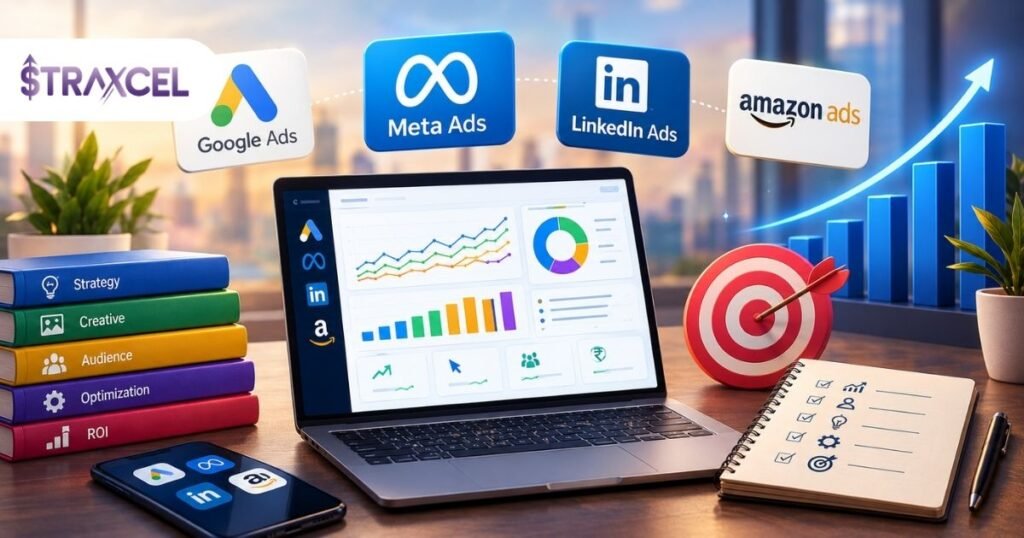
Growth beyond that ceiling has to come from somewhere else – paid social, affiliate partnerships, or programmatic display.
The brands that grow sustainably are the ones treating these channels as one connected system, not a list of separate line items. Search captures demand that already exists.
Paid social creates new demand by putting your product in front of people who weren’t actively searching for it yet. Affiliate marketing extends your reach through voices people already trust, which matters a lot in categories where consumer trust takes time to earn. Programmatic and native ads keep you visible across the wider internet, backing up everything else your paid campaigns are doing.
I ran this exact approach with a footwear brand a while back. Their Meta campaigns were converting at a cost of around ₹2,000 per acquisition against a margin of roughly ₹5,000 per pair, comfortably profitable.
Their Google Shopping listings for the same product were closer to ₹3,300 per acquisition, which still worked, but nowhere near as efficiently.
Most marketers would kill the weaker channel entirely. We didn’t.
We shifted most of the budget toward Meta while keeping Google Shopping alive at a smaller spend, because it was still reaching a different kind of buyer – someone actively comparing options versus someone seeing the brand for the first time. Cutting it off completely would have shrunk our total reach, not just the waste.
That’s the nuance people miss when they treat performance marketing as a pure cost-cutting exercise.
Sometimes an “expensive” channel is expensive because it’s reaching a harder-to-convert but still valuable audience, not because it’s broken.
The Metrics That Actually Deserve Your Attention
Every ad platform throws dozens of numbers at you, and I’ve seen marketers get lost in vanity metrics while missing the four or five that actually decide whether the business is healthy.
Click-through rate tells you if your creative and targeting are earning attention. Useful, but it’s an early signal, not a business outcome.
Conversion rate tells you whether the people who clicked actually found what they expected once they landed on your page.
A gap between a strong click-through rate and a weak conversion rate almost always points to a mismatch between what the ad promised and what the landing page delivered, and that’s one of the most common leaks I find when auditing accounts.
Customer acquisition cost and return on ad spend are where the real conversation with business owners happens, because these numbers connect marketing activity directly to profit.
But the number I push clients to focus on more than any other is lifetime value, because acquisition cost alone only tells half the story.
I’ve worked with businesses whose acquisition cost looked alarming on paper, until we factored in that their average customer stayed for three years and referred two more.
Chasing a low acquisition cost in that case would have meant under-investing in growth and leaving money on the table.
If you’re only looking at cost per click or cost per lead on their own, you’re managing a spreadsheet, not a business.
What This Actually Means For How You Should Operate
If there’s one habit I’d want every founder or marketing lead reading this to adopt, it’s this: build your tracking and attribution setup properly before you scale your ad spend, not after.
I can’t count the number of accounts I’ve been brought in to “fix,” where the real problem wasn’t strategy at all. It was that nobody could trust the data in the first place.
Fix that foundation, and everything after it – creative testing, budget shifts, channel decisions – becomes far easier to get right.
The second habit is treating your channel mix as something you review monthly, not a budget split you decided on once and forgot about.
Auction costs shift, new competitors show up, seasonal demand changes, and a channel allocation that made sense a quarter ago can quietly turn inefficient without anyone noticing until the numbers come in.
This is really why a scattered, single-channel approach to digital growth rarely works long term. Search, social, affiliate, and programmatic aren’t separate departments competing for the same rupee.
They’re connected parts of one revenue engine, and the businesses that understand this are the ones I’ve watched grow steadily year after year, instead of spiking once and then flattening out.