A restaurant owner once told me he almost didn’t hire a social media marketing agency because he assumed he’d just be paying someone to post nice food photos with the right hashtags.
Six months into working with us, he said something that stuck with me – “I had no idea this much was actually happening behind the scenes.”
He wasn’t wrong to be confused. From the outside, this industry looks like people scrolling on phones for a living.
From the inside, it’s closer to running a small production house, a data team, and a customer service desk, all at once, for someone else’s brand.
I’ve built and managed social media accounts for brands across categories in India, from D2C skincare to real estate to restaurants, and the gap between what people think this work involves and what it actually takes is bigger than in almost any other part of digital marketing.
So let me walk you through what a social media marketing agency actually does, day to day, once you look past the surface.
It Starts With Strategy, Not Content
Before a single post gets designed, a proper social media agency spends real time understanding who your customer actually is. Not a vague idea of them – specifics. What platforms do they spend time on.
What kind of content stops their scroll. Whether your business even belongs on every platform, because it usually doesn’t. A B2B software company has no business chasing trends on Instagram Reels the same way a fashion brand does.
It probably belongs on LinkedIn, talking to decision-makers in a completely different tone.
Once that’s clear, the agency builds what’s usually called content pillars – a handful of consistent themes that keep your feed focused instead of random.
Alongside that comes your visual identity – colors, fonts, tone of voice – and a monthly content calendar that maps out what gets posted, where, and when.
This groundwork is invisible to the client most of the time, but it’s the difference between a feed that feels intentional and one that feels like someone’s just filling a quota.
Then Comes the Actual Production Work
This is where most of the daily hours go, and it’s far more hands-on than people expect.
Short-form video has completely taken over how brands grow on social media, and a competent social media marketing agency spends a huge amount of time scripting, filming, and editing vertical videos for Reels, TikTok-style content, and YouTube Shorts.
A huge part of that work happens in the first three seconds of every video – the hook.
If someone doesn’t stop scrolling in that window, the rest of the video doesn’t matter, no matter how good it is. Teams also track trending audio and formats daily, because what works on social media shifts week to week, sometimes faster.
Alongside video, there’s a steady stream of graphic design work – carousels, infographics, story templates – all built to match brand guidelines exactly.
And every single piece of content needs a caption written around it, with the right keywords for social search and a clear call to action, because a beautiful post that doesn’t ask the viewer to do anything is just decoration.
Paid Social Is a Completely Different Job
Organic content builds an audience slowly. Paid social media marketing is how you reach the people who’ve never heard of your brand yet, and it’s genuinely a separate skill set within the same agency.
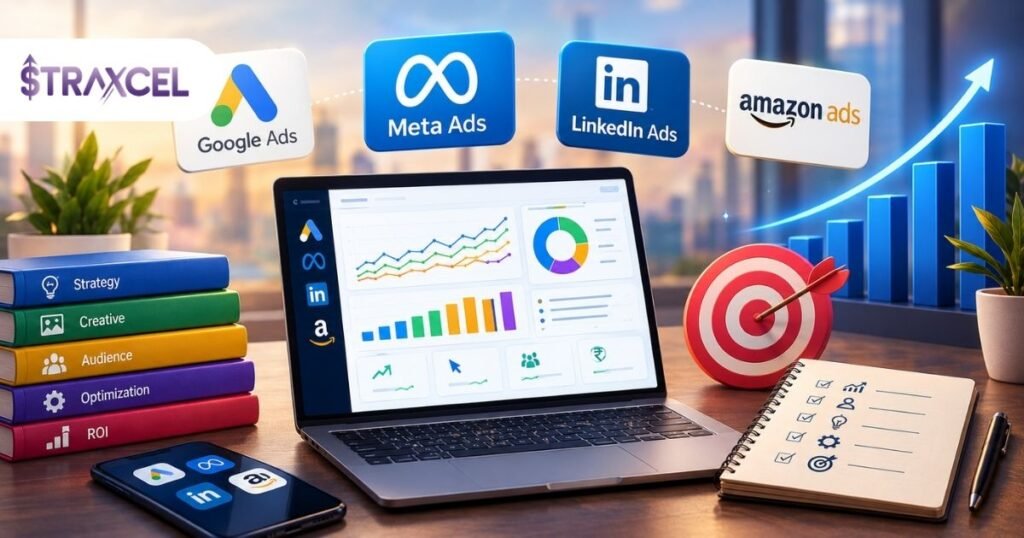
This is where media buyers step in, running campaigns through Meta Ads Manager, TikTok Ads, and LinkedIn Campaign Manager depending on where your customers actually are. They build lookalike audiences – new users who resemble your best existing customers – and retargeting funnels that bring back people who visited your site or watched a previous video but didn’t convert.
The part that separates a strong paid social team from a weak one is testing. Good media buyers are running several ad variations at once – different hooks, different images, different copy – and constantly shifting budget toward whatever’s actually converting, based on cost per click and return on ad spend. This isn’t a set-it-and-forget-it process. It’s checked daily, sometimes hourly, during an active campaign.
Someone Has to Actually Talk to Your Customers
This is the part people forget entirely. Social media is a two-way conversation, and the platforms themselves reward accounts that respond quickly to comments and messages.
A proper social media agency manages this daily – answering DMs, replying to comments, catching and handling complaints before they turn into a bigger problem.
There’s also an outward-facing side to this – engaging with other relevant accounts, industry pages, and complementary brands to keep your account visible beyond just your own followers.
And when something does go wrong online, whether it’s a negative comment thread or an early sign of a bigger issue, someone needs to be watching closely enough to catch it before it spreads.
Working With Creators and Influencers
People trust other people more than they trust a brand’s own posts, which is why influencer and creator partnerships have become such a core part of what agencies handle.
This isn’t just sending free products to whoever has a large following. It involves finding creators whose actual audience matches your target customer, checking that their engagement is genuine and not inflated by bots, negotiating usage rights and payment terms, and writing clear briefs so the creator highlights what matters about your product while still sounding like themselves.
Get this part wrong and you end up with content that feels forced and does nothing for the brand. Get it right and it often outperforms your own branded content by a wide margin.
The Reporting Most People Never See
At the end of each month, a good agency isn’t just sending you a list of likes and follower counts. Those numbers feel good but rarely tell you anything useful about your business.
What actually matters is engagement rate – are people spending real time with your content or scrolling straight past it. Share of voice – how often your brand comes up compared to competitors in your space.
And conversion attribution – how much of your actual website traffic or revenue is genuinely coming from social media, not just impressions.
This is usually where the real value of hiring a social media marketing agency becomes obvious, because connecting content performance back to actual business outcomes takes tools and time most business owners simply don’t have.
Why Businesses End Up Hiring This Out
Running all of this well, consistently, month after month, is close to a full-time job on its own, even before you factor in the tools, software subscriptions, and creative talent it requires.
That’s really the value a social media marketing agency provides – taking a task that feels overwhelming and turning it into a structured system, backed by people who do this daily and have already made the expensive mistakes elsewhere.
If you’re evaluating whether to bring this in-house or hire an agency, the honest answer is it depends on your stage and budget, but understand what you’re actually signing up for either way.
This isn’t posting pretty pictures. It’s strategy, production, paid media, customer service, and data analysis, running at the same time, every single day.