

Social Media Updates

LinkedIn Shares New Insights Into Younger Professionals (Straxcel Business Solutions)
Social Media Updates, LINKEDIN

LinkedIn Shares New Insights into Younger Professionals

LinkedIn Shares New Insights Into Younger Professionals LinkedIn has published new research based on a survey of over 18,000 professionals, looking at how Gen Z is approaching the workforce and what marketers need to know to connect with them. On the professional side, 72% of Gen Z professionals say they’re missing out on opportunities because they hesitate to reach out, citing fear of bothering people (37%), being judged (37%), or sounding inauthentic (34%). Over half, 53%, aren’t sure how to even start networking professionally. This matters because LinkedIn found 27% of Gen Z professionals landed their next opportunity through online professional communities, and job applicants with an inside connection were nearly 7 times more likely to get hired than those without one. On the marketing side, the data is just as telling. 9 in 10 marketers agree future growth depends on influencing younger decision-makers. 42% say content from expert voices is the most effective way to connect with this audience. 86% of marketers agree Gen Z and millennial buyers trust peer recommendations and expert voices more than branded marketing. And 49% of Gen Z buyers are most likely to engage with short-form and immersive video. Brand credibility is also outweighing brand visibility for this generation, with 73% of respondents saying credibility now matters more than simply being seen. What This Means For Brands and Marketers in India If you’re trying to reach Gen Z professionals or consumers, this data points clearly toward one format: short-form video featuring genuine expert voices, not polished branded ads. This audience trusts real perspective over marketing gloss, so investing in named, authentic content, from your own team or credible voices in your space, is likely to outperform generic brand messaging with this group. Clients Also Ask Why is Gen Z hesitant to network on LinkedIn despite it being where opportunities live? The fear isn’t really about the platform, it’s social anxiety around reaching out at all. That gap between where opportunities exist and how comfortable people feel pursuing them is a real signal for employers and platforms alike, not just a personality trait of this generation. Brands and recruiters who make the first move, rather than waiting to be approached, will likely see better engagement from this group. Does this mean brands should stop running traditional branded ads to Gen Z? Not entirely, but the data is a clear warning against relying on branded messaging alone. With 86% of marketers agreeing this audience trusts peer and expert voices more than brand marketing, the smarter move is pairing any branded campaign with genuine expert or employee-voice content, not replacing one with the other outright. What kind of content actually works best with LinkedIn audience? Short-form and immersive video featuring real expert insight is the clear standout in this data. This isn’t just a content format preference, it reflects a deeper trust pattern, this generation responds to perceived authenticity and expertise far more than production value or brand polish. How does this affect B2B marketing specifically? Significantly. With 9 in 10 marketers agreeing future growth depends on influencing younger decision-makers, B2B brands need to start building relationships with Gen Z now, even before they’re the ones signing off on purchases. Waiting until they’re in senior roles to start engaging them means starting from zero trust at a critical decision point. Should companies change how they encourage employee networking internally? Yes, and this is arguably the most actionable insight here. With over half of Gen Z professionals unsure how to start networking, companies that actively build structured mentorship or connection programs internally are likely to see stronger engagement and retention from younger employees than those who leave networking entirely up to individual initiative. Recommended For You LinkedIn Shares New Insights into Younger Professionals Learn more Top 20 Expert Tips For Performance Marketing : Why Decision-Making is Your Real ROAS Engine Top 20 Expert Tips For Performance Marketing : Why Decision-Making Is Your Real ROAS Engine… Learn more Where I See Digital Marketing Heading Over the Next 5 Years Where I See Digital Marketing Heading Over the Next 5 Years Look back at India’s… Learn more Author Profile STRAXCEL blogs are written by Mr. Subham Sarkar, who has extensive level of experience and expertise and helped 100+ startups to excel their revenue. Post Categories 360 Digital Marketing Business Development Expert Answers Clients Results Founder Insights Service Guides AI Tools Industry Insights What We Offer Full-stack Website Development Search Engine Optimization Generative Engine Optimization Social Media Management Mobile App Development Performance Marketing Content Creation Latest Updates Full-stack Website Development Search Engine Optimization Generative Engine Optimization Social Media Management Mobile App Development Content Creation Joke of the Day Performance marketers don’t sleep, they just refresh the dashboard every 4 hours and call it self-care.
LinkedIn Says 1 Million People Have Reported AI Slop (Straxcel Business Solutions)
LINKEDIN, Social Media Updates

LinkedIn Says 1 Million People Have Reported “AI Slop”

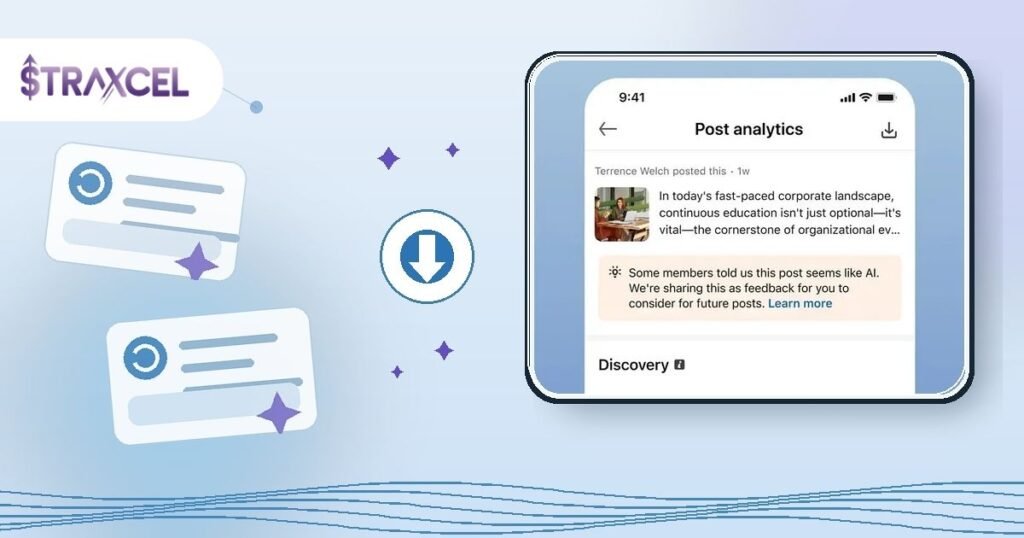
LinkedIn Says 1 Million People Have Reported “AI Slop” LinkedIn’s “seems like AI slop” reporting option, launched earlier this month, has already been used by more than a million people in its first two weeks, according to Chief Product Officer Hari Srinivasan. LinkedIn defines AI slop as content that looks polished but has no real substance, no genuine experience, perspective, or insight, just generic text posted to grab attention without effort. Using AI to refine your writing isn’t the target here. Empty, low-effort posts are. Importantly, LinkedIn clarified that reporting a post as AI slop doesn’t reduce that post’s overall distribution on the platform. It only affects what the reporting user personally sees in their own feed going forward. A post only takes a real distribution hit if a large number of people report the same concern, since LinkedIn weighs many signals together rather than acting on individual reports. LinkedIn is also rolling out notifications to creators who receive a high volume of AI slop reports, aiming to inform rather than punish. The impact so far : content LinkedIn classifies as AI slop is seeing 40% fewer views than just a few weeks ago. What This Means For Brands and Creators in India If you’re posting on LinkedIn for business, this is a clear signal to prioritise genuine insight and real experience over generic, AI-polished filler. LinkedIn is actively building signals to detect and suppress low-substance content, and getting flagged repeatedly could quietly shrink your reach over time, even without a formal penalty. Using AI to tighten your writing is still fine. Using it to generate the substance of your posts is where this starts working against you. Clients Also Ask Will using AI to write my LinkedIn posts get me penalised? Not directly, and LinkedIn has been explicit about this. Using AI to refine your language or tighten a draft isn’t the issue. The problem is posting content with no real perspective or experience behind it, AI-written or not. A well-reasoned post edited with AI assistance is treated very differently from a generic AI-generated post with nothing behind it. How much does one AI slop report actually hurt my content? Very little on its own. LinkedIn has confirmed a single report only affects what that individual user sees in their feed, not your post’s overall distribution. The real impact only shows up when a meaningful number of people flag the same content, which is a much stronger signal that something’s genuinely low-value. Should I be worried about getting flagged if my writing sounds polished? Polish itself isn’t the issue, substance is. LinkedIn’s own definition specifically separates “sophisticated presentation” from actual insight or experience. If your post reflects a real point of view or genuine expertise, sounding well-written shouldn’t work against you. The risk is when polish is the only thing the post has going for it. What’s the actual business impact of this for brands using LinkedIn? Content classified as AI slop is already seeing a real, measurable drop, about 40% fewer views since the option launched. For brands running LinkedIn as part of their marketing mix, this is a signal to invest in genuinely useful, experience-backed content rather than volume-driven, generic posting, since the platform is actively working to suppress the latter. Recommended For You LinkedIn Says 1 Million People Have Reported “AI Slop” LinkedIn Says 1 Million People Have Reported “AI Slop” LinkedIn’s “seems like AI slop” reporting… Learn more What I Tell Every Founder Before They Scale Their Ad Spend What I Tell Every Founder Before They Scale Their Ad Spend There’s a moment almost… Learn more Meta Testing Keyword-Triggered Auto-DMs on Instagram Ads Meta Testing Keyword-Triggered Auto-DMs on Instagram Ads Meta is testing a new feature called Reply… Learn more Author Profile STRAXCEL blogs are written by Mr. Subham Sarkar, who has extensive level of experience and expertise and helped 100+ startups to excel their revenue. Post Categories 360 Digital Marketing Business Development Expert Answers Clients Results Founder Insights Service Guides AI Tools Industry Insights What We Offer Full-stack Website Development Search Engine Optimization Generative Engine Optimization Social Media Management Mobile App Development Performance Marketing Content Creation Latest Updates Full-stack Website Development Search Engine Optimization Generative Engine Optimization Social Media Management Mobile App Development Content Creation Joke of the Day Performance marketers don’t sleep, they just refresh the dashboard every 4 hours and call it self-care.
Meta Testing Keyword-Triggered Auto-DMs on Instagram Ads (Straxcel Business Solutions)
Social Media Updates, META

Meta Testing Keyword-Triggered Auto-DMs on Instagram Ads

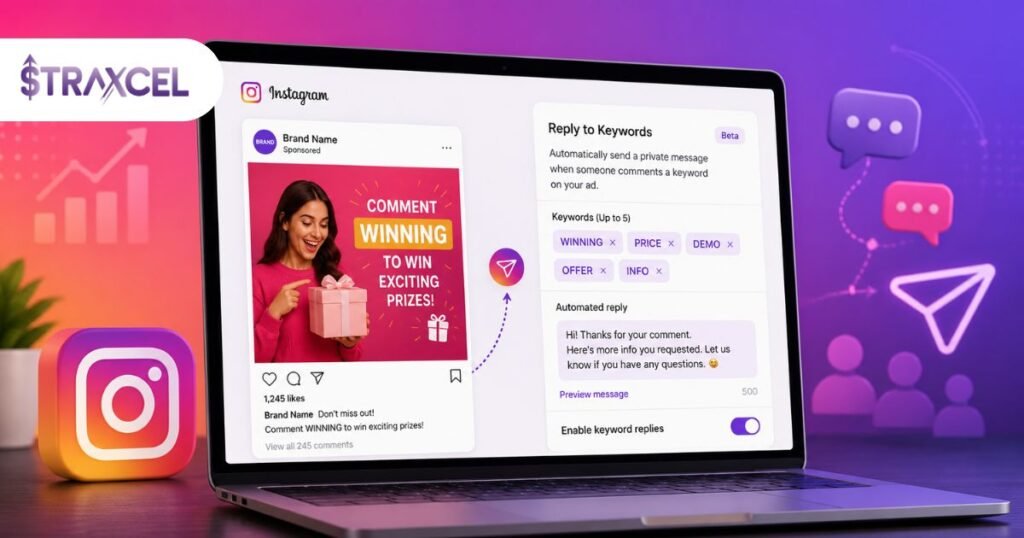
Meta Testing Keyword-Triggered Auto-DMs on Instagram Ads Meta is testing a new feature called Reply to Keywords, now appearing in Instagram ad setup tools for some advertisers. It lets brands pick up to five keywords, and whenever someone comments one of those keywords on a promoted post, Instagram automatically sends them a private DM. The idea is simple : an ad could say “comment WINNING for more info,” and instead of a team member manually replying to every comment, Instagram’s system sends the follow-up DM automatically. It’s built to speed up lead nurturing directly from ad comments, without any manual work on the advertiser’s side. A version of this already exists through Meta’s inbox automation and Business Agent tools, but this ties the same functionality directly into Instagram’s ad setup, making it easier to trigger from a single promoted post. For now, it’s only showing up for Instagram ads, not Facebook. What This Means For Advertisers in India This is a low-effort way to turn ad comments into a direct lead-nurturing channel without adding manual work for your team. If you’re running Instagram ad campaigns, it’s worth testing keyword-based CTAs like “comment for pricing” or “comment DEMO,” since a warm DM follow-up often converts better than someone having to leave the app to fill out a form. Worth noting: this is still a limited test, so availability may vary by account, and there’s no confirmed wider rollout date yet. Clients Also Ask Will this replace the need for a team member to manage DMs? Not entirely. This handles the first response well, but any real conversation past that initial keyword-triggered DM still needs a person or a more advanced automation tool to carry it forward. Think of it as a fast first touch, not a full replacement for follow-up. Is this actually useful, or just a gimmick? It’s genuinely useful for one specific job : reducing the lag between someone showing interest in a comment and getting a response. In my experience, response speed on social media directly affects conversion, so even this simple a feature can meaningfully improve lead quality if you’re getting decent comment volume on your ads already. Should I switch my ad CTAs to use this now? If you’re already running Instagram ads and have access to the test, it’s worth trying on one campaign before rolling it out everywhere. Test a clear, simple keyword against your current CTA and compare DM response rates and follow-through, rather than assuming it’ll automatically outperform what you’re doing now. Why is this only on Instagram and not Facebook ads yet? Meta has been pushing DMs as a growing channel for consumer-to-business interaction for a while now, and Instagram tends to get these conversational features first since DM usage skews heavier there. It’s reasonable to expect this to expand to Facebook ads eventually if the test performs well, but there’s no confirmed timeline yet. Does this fit into a bigger trend worth watching? Yes. Meta’s been steadily investing in DM-based business tools as messaging becomes a bigger part of how people interact with brands online. Advertisers who get comfortable building keyword-triggered and automated DM flows now will likely have an easier time adapting as Meta rolls out more advanced conversational ad tools down the line. Recommended For You Meta Testing Keyword-Triggered Auto-DMs on Instagram Ads Learn more Semrush vs Ahrefs : Which SEO Tool Should You Actually Buy Semrush vs Ahrefs : Which SEO Tool Should You Actually Buy Every few weeks, a… Learn more Top Digital Marketing Trends To Excel Your Business in India Top Digital Marketing Trends To Excel Your Business in India A client of mine, someone… Learn more Author Profile STRAXCEL blogs are written by Mr. Subham Sarkar, who has extensive level of experience and expertise and helped 100+ startups to excel their revenue. Post Categories 360 Digital Marketing Business Development Expert Answers Clients Results Founder Insights Service Guides AI Tools Industry Insights What We Offer Full-stack Website Development Search Engine Optimization Generative Engine Optimization Social Media Management Mobile App Development Performance Marketing Content Creation Latest Updates Full-stack Website Development Search Engine Optimization Generative Engine Optimization Social Media Management Mobile App Development Content Creation Joke of the Day Performance marketers don’t sleep, they just refresh the dashboard every 4 hours and call it self-care.

Meta Removes Option to Exclude Ad Placements (Straxcel Business Solutions)
META, Social Media Updates

Meta Removes Option to Exclude Ad Placements

Meta Removes Option to Exclude Ad Placements Meta is rolling out a change that removes the Placements option from ad sets, meaning advertisers will soon lose the ability to exclude specific placements from their campaigns. Until now, if you didn’t want your ad showing up in Facebook search results or in Reels, you could opt out of that placement directly. That control is going away. It doesn’t stop at placements either. Meta is also removing the option to exclude specific apps from a campaign. Going forward, its automated system will decide where each ad performs best, whether that’s Facebook, Instagram, or elsewhere across its apps, without the advertiser choosing. No official rollout date has been confirmed yet, but some advertisers are already being notified of the change. Why This is Happening This fits into Meta’s larger push toward fully automated ad campaigns. The long-term goal, as Meta’s CEO has described it, is a system where a business simply connects its objective and payment details, and Meta’s AI handles creative, targeting, and placement entirely on its own. Removing manual placement controls is one more step in that direction, shifting decision-making away from advertisers and fully into Meta’s automated system. What This Means For Meta Advertisers If you’re running Meta ads for your brand, this is worth watching closely. Less manual control means you’ll need to trust Meta’s algorithm to place your ads well, rather than steering that decision yourself. For brands that have deliberately kept ads out of certain placements, such as avoiding in-stream Reels ads or search placements for brand reasons, that flexibility may soon disappear. The upside, if Meta’s automation performs as promised, could be stronger overall results with less manual work. The risk is losing the fine-grained control that some performance marketing strategies depend on. Either way, it’s a good time to review your current placement settings and prepare for a shift toward a more automated setup. Clients Also Ask Will my current campaigns be affected immediately? No official rollout date has been confirmed yet, so existing campaigns should keep running as they are for now. That said, once the change lands, any placement exclusions you’ve set up manually will stop applying, so it’s worth documenting your current setup now in case you need to rebuild targeting logic elsewhere later. Can I still avoid placements I know don’t work for my brand, like Reels or Audience Network? Not directly once this rolls out. In my experience, this is the change that’ll sting most for brands that avoided certain placements for legitimate reasons, not just performance, but brand safety, like keeping ads off content types that don’t match their tone. Without exclusion controls, that safeguard disappears, and the only real workaround is closely monitoring where your ads actually run and adjusting creative to work across more contexts. Does this mean Meta’s automated placement will perform better than my manual choices? Sometimes, yes. Meta’s system has access to performance data at a scale no single advertiser can match, and broader placement testing often does surface cheaper, better-converting inventory you wouldn’t have found manually. But “better on average” isn’t the same as “better for every brand,” and businesses with narrow, specific audiences or strict brand guidelines may see this as a net loss of control, not a gain in performance. Should I pause or restructure my campaigns ahead of this change? I wouldn’t recommend pausing anything yet, since there’s no confirmed date. What’s worth doing now is reviewing why you excluded certain placements in the first place. If it was purely a performance call, automation may actually improve results. If it was a brand safety or messaging call, start preparing creative variations that can hold up across a wider range of placements, because that flexibility will matter more once manual exclusion is gone. Is this part of a bigger shift advertisers should be preparing for? Yes, and this is the part worth paying real attention to. This sits inside Meta’s broader move toward fully automated campaigns, where creative, targeting, and placement are eventually all handled by its AI with minimal advertiser input. The practical takeaway for brands is to get comfortable feeding Meta’s system strong creative variety and clean conversion data now, since that’s likely to become the main lever advertisers have left as manual controls keep getting phased out. Recommended For You Meta Removes Option to Exclude Ad Placements Meta Removes Option to Exclude Ad Placements Meta is rolling out a change that removes… Learn more How Does Google Ads Bidding Actually Work? How Does Google Ads Bidding Actually Work? The first time I explained Google Ads bidding… Learn more What Is Local SEO and Why It Is a Must For Local Businesses in 2026 and Beyond What Is Local SEO and Why It Is a Must For Local Businesses A dental… Learn more Author Profile STRAXCEL blogs are written by Mr. Subham Sarkar, who has extensive level of experience and expertise and helped 100+ startups to excel their revenue. Post Categories 360 Digital Marketing Business Development Expert Answers Clients Results Founder Insights Service Guides AI Tools Industry Insights What We Offer Full-stack Website Development Search Engine Optimization Generative Engine Optimization Social Media Management Mobile App Development Performance Marketing Content Creation Latest Updates Full-stack Website Development Search Engine Optimization Generative Engine Optimization Social Media Management Mobile App Development Content Creation